


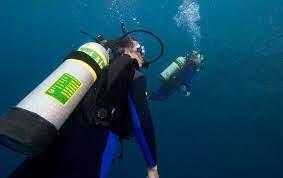
The air that we breathe at the surface and the air from a scuba tank have the same mixture gases, 21 percent oxygen and 79 percent nitrogen, minus some traces of other gases. In other words, Nitrox 21.
If the nitrogen-oxygen gas mixture has a higher oxygen concentration than those 21 percent, it’s referred to as enriched air (EAN).
The most common mixture is Nitrox 32, which contains 32 percent oxygen and 68 percent nitrogen, however many dive centers can offer customized blends for Enriched Air certified diver up to 40% Nitrox. Scuba tanks filled with nitrox should be clearly marked with sticker.
While breathing nitrox the diver absorbs less nitrogen in the body and that reduces the chance of decompression sickness (DCS), improving your overall diving safety. Recreational Nitrox, which may contain anything between 21 and 40 percent of oxygen, has a lower percentage of nitrogen than air. This allows divers to extend their no-decompression limits/ dive time by reducing the amount of nitrogen that is absorbed. The less nitrogen there is in a diver’s breathing gas, the lower his nitrogen absorption will be at a given depth. A Nitrox diver absorbs less nitrogen for a given depth and dive time than a diver who uses air. This means that that diver has less nitrogen to off-gas during a required surface interval, which can drastically shorten it. Many divers report a significant difference in alertness after a dive with Nitrox. They claim to be less exhausted than after a comparable dive on air, which may be caused by the lower absorption of nitrogen. If you plan a dive to 21 meters on air, your maximum no-stop time is 40 minutes. If you’re diving to the same depth with 32% enriched air, the no-stop time is 60 minutes—that’s a whole 20 minutes more of underwater time (unless you use up the gas in your tank before then, of course).